The Price Hill and West Side Guide: W 8th Street, Western Hills, and Where Cannabis Fits In
Cincinnati's West Side has always been its own thing — a network of neighborhoods west of Mill Creek with a specific cultural identity that long predates the current map of the city. This is a working guide to the part of Cincinnati that Shangri-La Cincinnati, at 4505 W 8th Street, calls home: Price Hill, Westwood, Covedale, Western Hills, and the corridors that tie them together.
What People Mean by "The West Side"
"West Side" in Cincinnati usually means the neighborhoods west of Mill Creek — a geographic boundary that separates Downtown and OTR from the older, hillier, more residential west. The core West Side neighborhoods include Price Hill (split into Lower, East, and West), Westwood, Covedale, Western Hills, Sayler Park, Riverside, and the smaller neighborhoods along the I-74 corridor. The identity is partly geographic, partly historical (many West Side neighborhoods developed as German Catholic working-class communities), and partly cultural (a sports loyalty, culinary tradition, and accent distinct from the east side).
Price Hill in Particular
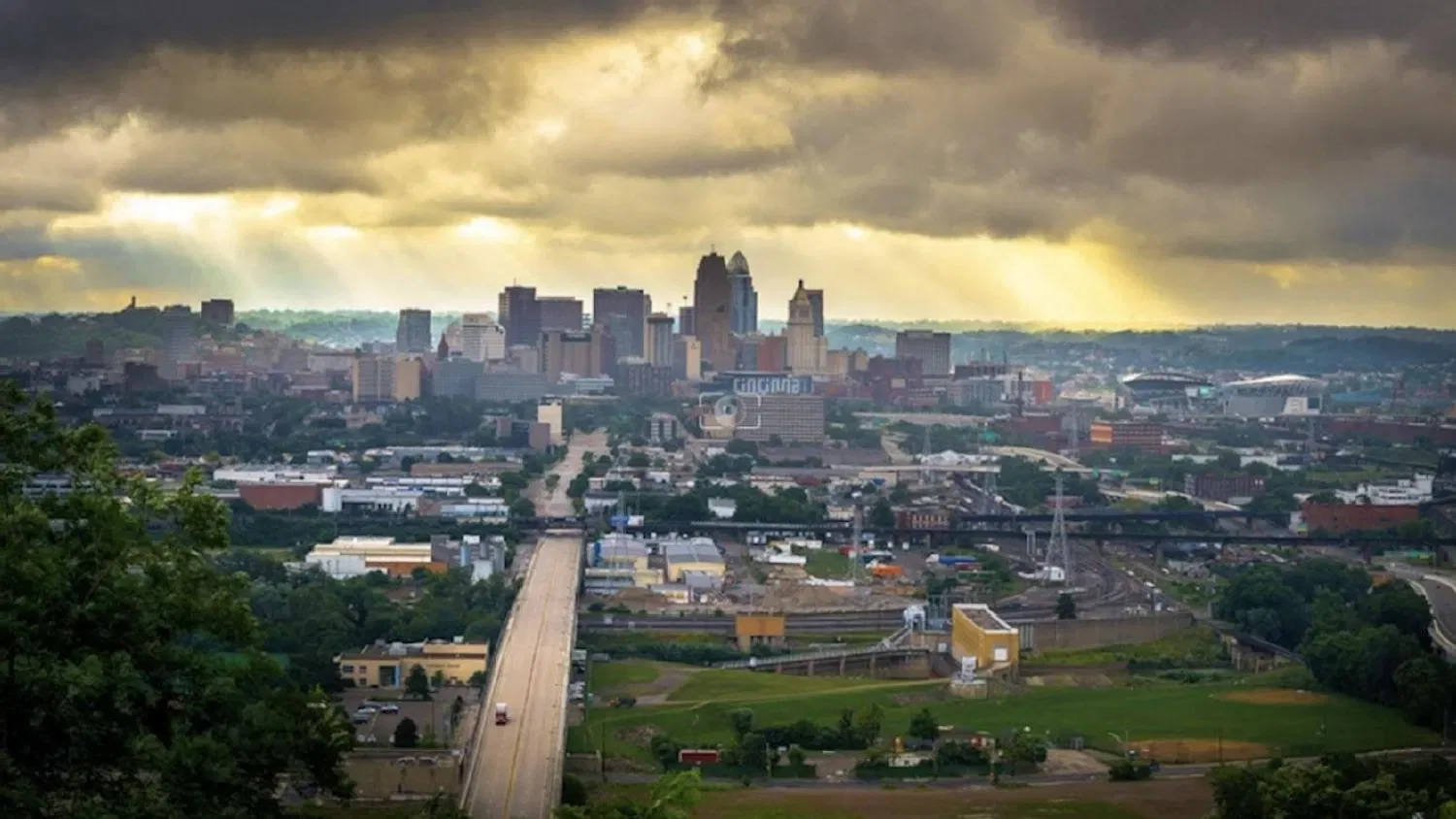
Price Hill sits on the bluffs overlooking the Ohio River and Downtown — the name comes from William Price, an early 19th-century landowner whose family shaped the neighborhood. East Price Hill runs from the Incline District down to Warsaw Ave; Lower Price Hill sits at the base of the hill along River Road; West Price Hill extends further out toward Covedale. The neighborhood has a long civic history — St. Lawrence Church, Elder High School, Seton High School, the Price Hill Historical Society — and is currently in a slow cultural recovery driven by local small-business activity, community development, and the kind of walkable-corridor retail investment that finally includes a licensed cannabis dispensary.
The W 8th Street Corridor
West 8th Street is the working main street of the west central part of the West Side — a long east-west corridor that connects Price Hill to Western Hills, passing through commercial blocks, neighborhood retail, restaurants, auto shops, and service businesses. Shangri-La Cincinnati's address at 4505 W 8th puts it in the corridor's commercial core. The corridor has excellent drive access from the Ohio River road network, Glenway Ave, and the I-74 system.
Westwood: Cincinnati's Largest Neighborhood
Westwood is Cincinnati's largest neighborhood by population and land area — roughly 30,000 residents across a diverse collection of housing types. The neighborhood has been the subject of significant community development work in recent years, with business-district revitalization around Harrison Ave, arts-space investment, and a gradually stabilizing retail environment. For Shangri-La Cincinnati, Westwood is a core customer base, reachable in about 10 minutes down Harrison or Montana Aves.
Western Hills and Covedale
Western Hills is a loose designation for the residential hillside neighborhoods above W 8th — single-family homes, quiet streets, and the Western Hills Viaduct connecting the West Side to Downtown. Covedale sits further west along Glenway Ave, with a historic cinema and walkable commercial core. Both neighborhoods are served by West Side dispensaries at W 8th and the Glenway corridor.
Culture and Identity
The West Side has a distinctive culture: UC Bearcats and Cincinnati Reds loyalty, a specific pronunciation pattern (the so-called Cincinnati dialect), German Catholic heritage that shaped the architecture and institutions, and an insider/outsider dynamic with the rest of the city. West Side restaurants — Price Hill Chili, Pompilio's, Pasta Patti's — have been institutions for decades. A licensed cannabis dispensary becoming part of that same commercial fabric is a minor but meaningful signal of how normalized legal cannabis has become in Greater Cincinnati.
Food, Drink, and Errands Around 4505 W 8th
Within a 10-minute drive of Shangri-La Cincinnati: classic West Side chili parlors, Skyline and Gold Star outposts, neighborhood diners, longtime Italian restaurants, and pizza traditions that are distinctly Cincinnati. Coffee at the Price Hill institutions. Groceries along Glenway. A half-dozen auto shops and service businesses on W 8th itself. This is a neighborhood where a dispensary is a retail errand among retail errands — a supermarket run, a pharmacy run, a dispensary run.
Parking and Getting Around
Street parking is available along W 8th Street and adjacent cross streets, and most West Side businesses offer on-site parking lots. Cincinnati's SORTA Metro bus system runs W 8th and connects into the West Side grid; check go-metro.com for schedules. Cyclists can reach the corridor via neighborhood streets, though W 8th itself is primarily a car-first corridor.
Why It Matters
A walkable commercial corridor that includes a legal dispensary alongside long-standing small businesses is exactly the post-legalization retail future that Issue 2 proponents argued for: a normal, tax-paying, employee-generating, neighborhood-integrated retail presence rather than a hidden illegal market. Whether you live in West Price Hill, Westwood, Covedale, or Western Hills, the broader cannabis culture now lives on your commute and your errand map. That's the 2026 West Side.